

24 March 2026
How to Clean Gold Jewellery Without Damaging It: Expert Guide
Gold does not oxidise, but it can lose its shine due to build-up (sebum, cosmetics, dust) and micro-scratches. Gentle, non-abrasive cleaning helps preserve its brilliance without damaging its surface.
Objective: clean gold jewellery effectively while avoiding scratches, material loss or damage to gemstones.
Can gold tarnish?
Contrary to popular belief, pure gold (24K) does not tarnish. However, most gold jewellery is made from alloys.
Simple chemical explanation
Gold is a noble metal: it does not oxidise when exposed to air or water. However, the metals added to the alloy, such as copper, silver or zinc, can oxidise, which may give the jewellery a dull appearance.
Pure gold vs alloys
- Pure gold (24K): does not tarnish, but it is too soft for most jewellery.
- 22K / 18K / 14K / 9K gold: more durable, but more sensitive to deposits and alloy oxidation.
The case of rhodium plating for white gold
White gold is coated with a thin layer of rhodium that gives it its bright finish. Over time, this layer wears away and the jewellery may appear slightly yellow. The solution is gentle cleaning and, if needed, re-plating by a professional.
How can you tell if a piece of jewellery is solid gold?
Before cleaning a piece of jewellery, it is essential to identify its nature.
1. Test the jewellery with a magnet
Gold is not magnetic. If the jewellery is attracted to a magnet, it is probably not solid gold.
2. Check for reactions on the skin
Gold jewellery should not normally leave green or black marks on the skin. If it does, this may indicate the presence of oxidising metals.
3. Use a polishing cloth
If the colour fades during polishing, the item may be gold-plated rather than solid gold.
4. Check the official hallmark
On precious metals, the hallmark is an essential mark used to certify authenticity and indicate the gold content of the jewellery. In the jewellery world, gold purity is expressed in carats, indicated by the letter k.
| Carat | Gold content | Hallmark |
|---|---|---|
| 24K | 99.9% | 999 |
| 22K | 91.6% | 916 |
| 18K | 75% | 750 |
| 14K | 58.5% | 585 |
| 10K | 41.7% | 417 |
| 9K | 37.5% | 375 |
18K gold offers the best balance between purity and durability.
Yellow, white and rose gold: what are the differences?
Each type of gold has its own characteristics. Here are the best-known gold colours and their compositions:
- Yellow gold: the most common type, as yellow is the natural colour of gold.
- White gold: an alloy of pure gold mixed with white metals such as palladium, silver or zinc to give it a lighter colour. It is often coated with a thin layer of rhodium to enhance its brightness. Abrasive products should be avoided.
- Rose gold: made from an alloy of fine gold, copper and silver. A common composition is 75% gold, 20% copper and 5% silver.
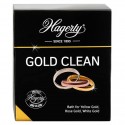
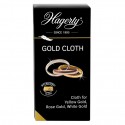
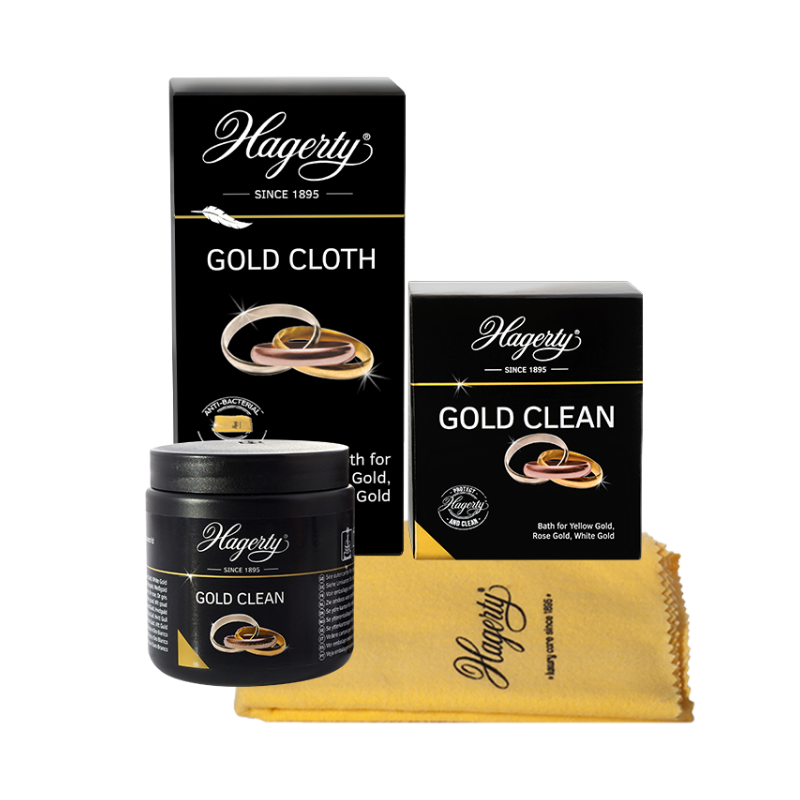
Good news: Hagerty offers two cleaning solutions suitable for all three types of gold: Gold Clean (cleaning bath) and Gold Cloth (polishing cloth).
How do you clean gold jewellery without damaging it?
Hagerty Gold Clean: cleaning bath for deep cleaning
- Time required: 2 minutes
- Action: dissolves impurities deep down
- Included: small basket for easy handling
- Ideal for: rings, chains and earrings
- ✔ Deep cleaning
- ✔ Scratch-free cleaning
- ✔ Suitable for yellow, white and rose gold
- ✔ Reusable
Hagerty Gold Cloth: polishing cloth for quick care
- Restores shine instantly
- Removes marks and visible dullness
- Do not wet or wash the cloth, as this would remove the cleaning agents
- Replace the cloth once it is completely blackened
- Reusable
- ✔ Gentle cleaning
- ✔ Scratch-free, high-quality weave
- ✔ Reusable
Expert tip: combine the cleaning bath and polishing cloth for the best possible result.
How do you clean gold jewellery set with precious stones?
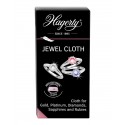
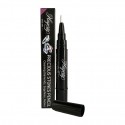
For the care and cleaning of gold or platinum jewellery set with precious stones such as diamonds, sapphires and rubies, Hagerty has developed three specific products:
- Jewel Clean: a quick and easy dipping bath in 2 minutes, with a small basket to place the jewellery in and a small brush to reach every tiny part of the setting.
- Jewel Cloth: an impregnated polishing cloth for the quick care of gold and platinum jewellery with precious stones.
- Precious Stones Pencil: a cleaning pen containing a gel specially designed for the care of precious stones wherever you are.
Home cleaning methods: how effective are they?
| Method | Effectiveness | Risk | Recommendation |
|---|---|---|---|
| Toothpaste | Moderate | ❌ Micro-scratches | Avoid |
| Bicarbonate of soda | Strong | ❌ Abrasive | Not recommended |
| Soapy water | Correct | ✔ Low | Acceptable |
| Specialist products (Hagerty) | Excellent | ✔ None | Recommended |
Conclusion: home methods can damage gold over time.
Best practices for protecting your gold jewellery
- Remove jewellery before sport or housework
- Avoid contact with perfumes and cosmetics
- Store pieces separately to avoid scratches
- Choose products specifically designed for gold
In conclusion, caring for gold jewellery requires gentleness, regular care and the right products. Abrasive methods should be avoided in favour of professional solutions that guarantee shine, safety and durability.
FAQ: Cleaning gold jewellery
Is toothpaste dangerous for gold?
Yes. It contains abrasive particles that create invisible but irreversible micro-scratches.
How do you clean a diamond ring?
Use a specialist cleaner such as Hagerty Jewel Clean, Hagerty Jewel Cloth and Hagerty Precious Stones Pencil to help extend the life of your precious jewellery.
Why does gold jewellery lose its shine?
Because of build-up such as creams, perspiration and dust, as well as oxidation of the alloyed metals. Gentle cleaning with specialist products is highly recommended.
Can gold lose material?
Although it does not disappear chemically, gold can be scratched or worn mechanically over time, resulting in a tiny loss of material through abrasion.